

Custom LLM applications
Build assistants, search experiences, and language-powered products around a defined business task and the people who use them.
Turn your business knowledge into useful AI experiences. AsonTech Solutions builds custom language applications, retrieval systems, and enterprise integrations with clear measures for quality, cost, and control.
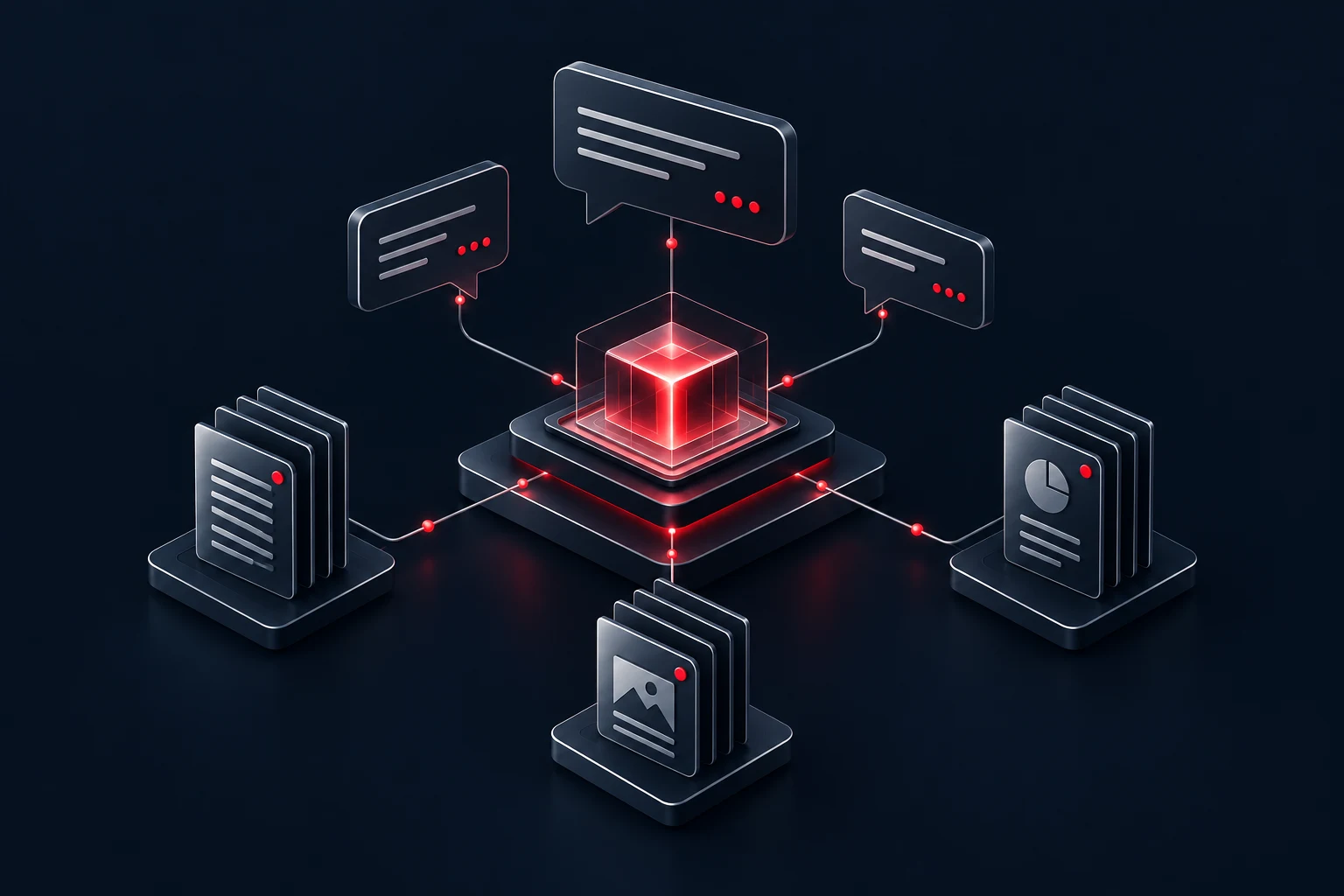
From an initial proof of value to an integrated application, choose the capabilities your workflow needs.
Build assistants, search experiences, and language-powered products around a defined business task and the people who use them.
Connect approved documents and business knowledge to model responses, with source references and permission-aware retrieval.
Adapt a suitable foundation model to specialized language, response formats, or repeatable tasks when evaluation supports the investment.
Connect language AI to your product, CRM, support tools, and internal systems through APIs and controlled workflows.
Test groundedness, task accuracy, prompt injection, data exposure, and failure handling before releasing to users.
Track quality, latency, and usage costs. Improve retrieval, prompts, and models as your content and requirements change.
Practical applications for teams serving customers, managing information, and building digital products.
Help employees find relevant policies, product information, and operating guidance with references to approved sources.
Draft responses, summarize conversations, and help agents locate answers while keeping escalation paths clear.
Extract structured information, classify documents, and prepare summaries for review in existing workflows.
Add contextual assistance to software products with permissions, usage controls, and feedback built in.
Shared milestones keep business stakeholders and engineering teams aligned throughout delivery.
Identify the workflow, users, success measures, and decisions that require human review.
Review source quality, access rights, sensitive information, and integration requirements.
Compare prompting, retrieval, and fine-tuning against a representative evaluation set.
Develop the application, retrieval pipeline, permissions, and system connections.
Evaluate real-world scenarios and failure cases, then introduce the system through a controlled rollout.
Review feedback, quality, response time, and cost to guide subsequent releases.
We define data boundaries, access permissions, evaluation criteria, and escalation rules alongside the application. Your team gets a clear view of what the system can do, where review is needed, and how performance will be measured.
What to consider before bringing language AI into your business.
LLM development turns large language models into useful business applications. It includes use-case planning, data preparation, model selection, retrieval or fine-tuning, integrations, evaluation, and deployment.
Usually, the first step is evaluating an existing foundation model. Prompting and retrieval may meet your needs. Fine-tuning is considered when a measured gap justifies it; training from scratch requires a separate assessment of data, compute, and cost.
RAG retrieves relevant information at request time, making it useful for changing business knowledge. Fine-tuning adjusts model behavior using training examples. The two approaches can be combined when the use case calls for it.
We can design access-controlled retrieval and deployment around your data requirements. Provider terms, retention, hosting, and user permissions should be agreed before connecting sensitive information.
We use task-specific evaluations, source grounding, output validation, and fallback behavior. For consequential decisions, the workflow should include human review. No language model can be promised to be error-free.
Scope, source quality, integrations, deployment requirements, and evaluation targets all affect delivery. A discovery phase establishes a practical plan and estimate before a production commitment.
Yes. We can contribute focused LLM engineering expertise or work as a dedicated delivery team, with scope, responsibilities, documentation, and handover agreed at the start.
Let’s identify where language AI can help and what it will take to deliver.
Talk to Our Team