
Service monitoring
Define health signals around the applications and journeys your users depend on.
- Service and dependency coverage
- Availability and performance signals
- Ownership for each monitored service
Give your team a clearer view of application health. AsonTech Solutions connects operational signals, useful dashboards, and alert workflows so engineers can investigate with context.
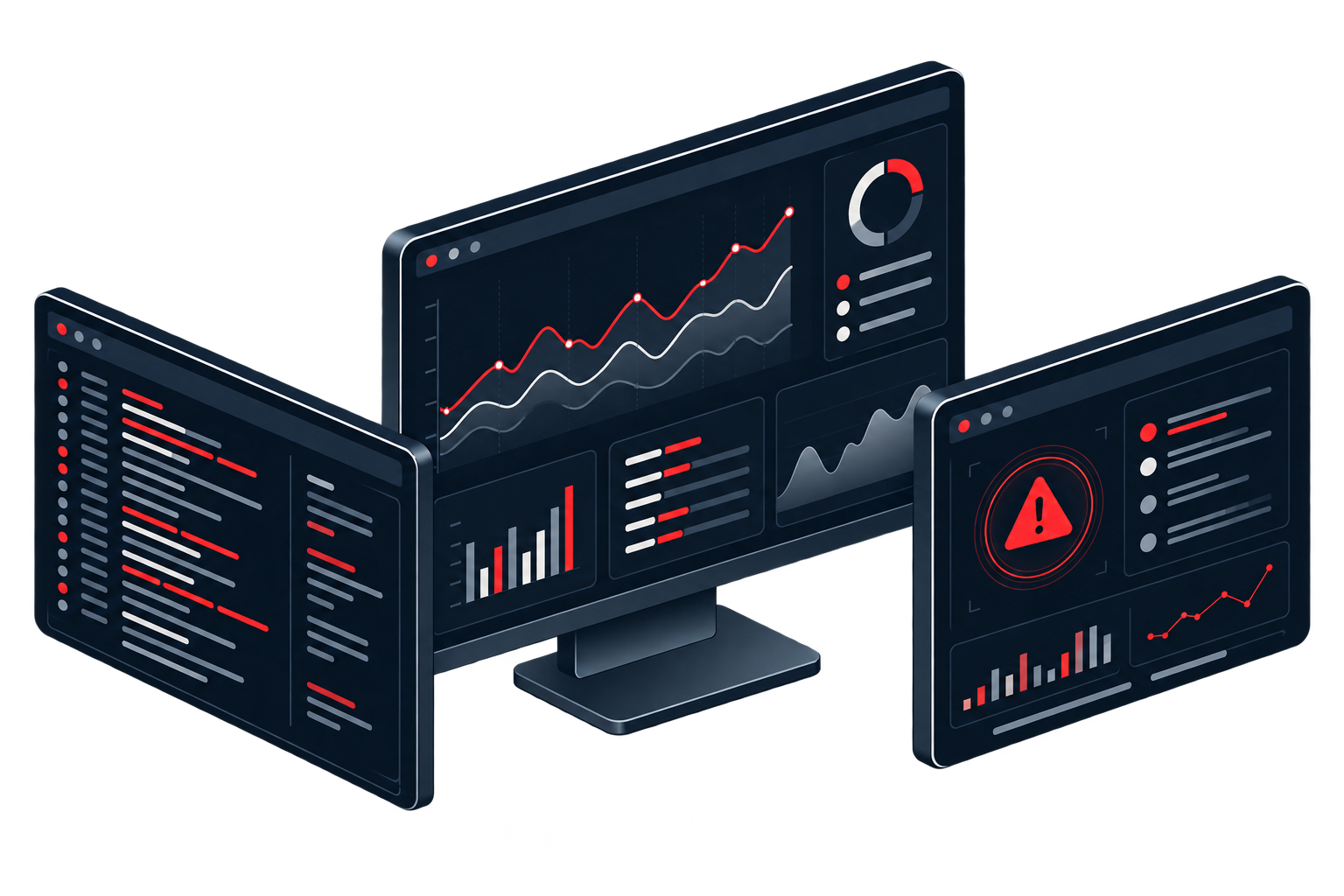
Define health signals around the applications and journeys your users depend on.
A defined process keeps coverage, ownership, and response expectations aligned.
Identify critical journeys, dependencies, and the operational questions your team needs to answer.
Review existing tooling, collection options, operating costs, and ownership.
Implement agreed collection and processing with consistent service and environment labels.
Exercise representative failures and check signal delivery, access controls, and alert routing.
Organize dashboards around service owners and the decisions they need to make.
Document response steps and revisit noise, coverage, and retention as systems change.
Track the signals that matter to your users, then route actionable changes to the right team.
Connect service behavior to relevant events so engineers have a clearer starting point.
Define access, redaction, and retention around your organization's data handling requirements.
Use a shared view of service behavior to prioritize maintenance and engineering work.
Review your current environment and leave with prioritized recommendations.
Discuss this approachConnect collection, dashboards, and alert workflows through a shared delivery plan.
Discuss this approachAdd observability engineering capacity and agree on ongoing review responsibilities.
Discuss this approachAnswers about coverage, alerts, data handling, and support.
An engagement can cover signal collection, centralized logs, service dashboards, alert routing, and operational documentation. We agree on the systems, data handling rules, and responsibilities before implementation.
Yes. We review what is already in place before recommending changes. The goal is a useful operating workflow that your team can maintain, with clear ownership and costs.
We agree on actionable conditions, severity levels, ownership, and escalation paths. Validation and periodic reviews help identify duplicate alerts and conditions that do not require action.
We define which fields should be excluded or redacted, who can access records, and how long they should be retained. The implementation is reviewed against your agreed data handling requirements.
We can plan a shared monitoring approach across both, subject to connectivity, access, and available integration methods. Discovery identifies gaps and constraints.
Instrumentation and collection can add overhead. We validate representative workloads and introduce changes in stages, with agreed checks and rollback options.
Support scope, service hours, response expectations, and escalation responsibilities are agreed separately. We can also provide documentation and handover for your internal team.